Helmets, marigolds and Mexican traditions: How Dia de Muertos has made its mark on F1
The 2026 Mexico City Grand Prix takes place during Dia de Muertos. Ahead of race day, discover the meaning behind the Mexican celebration and the memorable ways F1 drivers and teams have embraced its traditions.
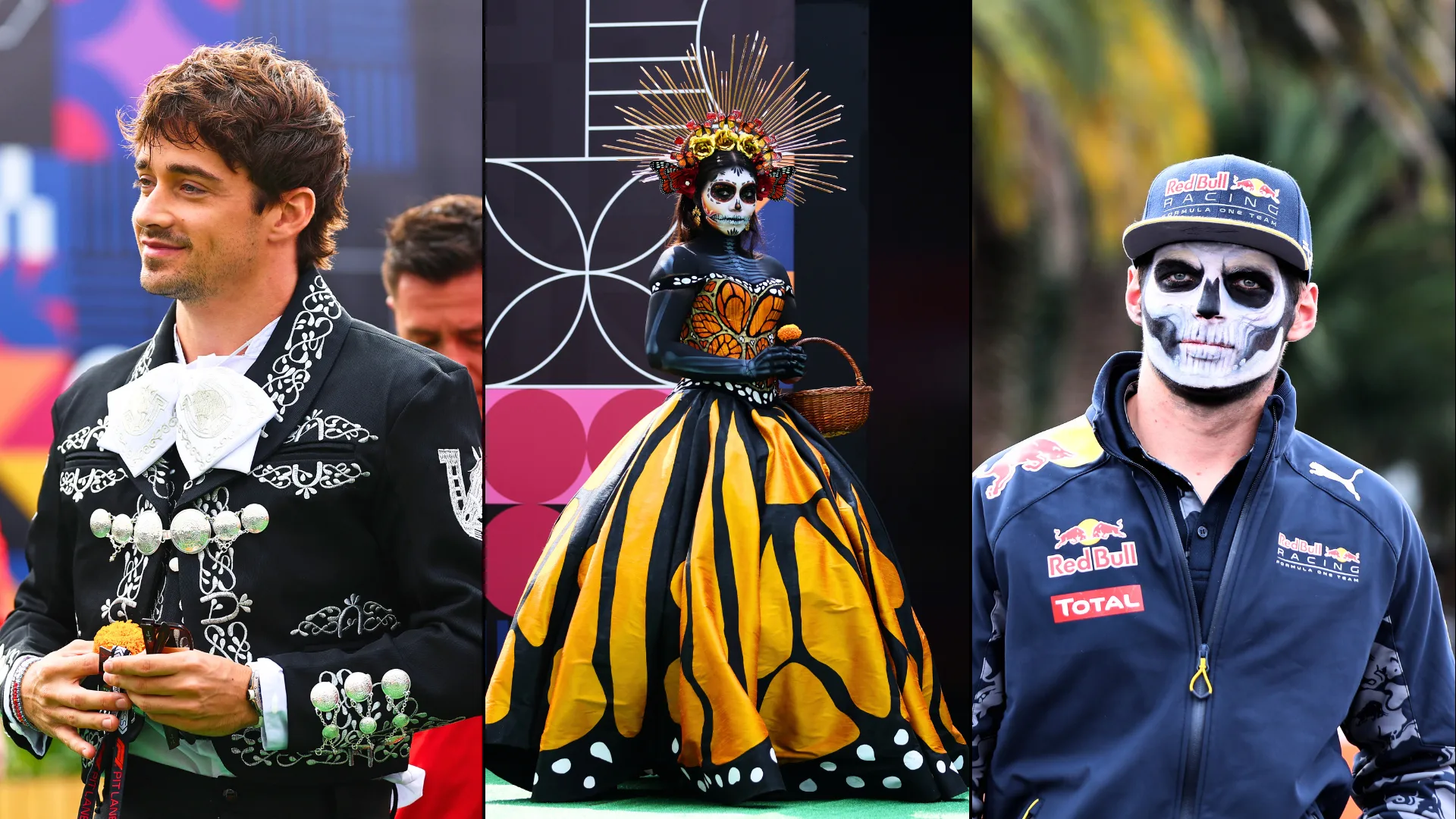
The Mexico City Grand Prix is renowned for its passionate crowds, colourful paddock and spectacular celebrations. But this year, the race takes place during one of Mexico's most important cultural occasions – Dia de Muertos, or Day of the Dead.
Taking place around the beginning of November, Dia de Muertos is a time for families to remember loved ones who have passed away and is traditionally marked through decorated altars, food, flowers and celebrations that bring communities together.
For Formula 1, the celebration has become a familiar part of its annual visit to the Autodromo Hermanos Rodriguez. Drivers have embraced the occasion through special helmets, elaborate face paint and even cooking challenges, while the paddock has welcomed performers and displays inspired by Mexican traditions.
As the 2026 race weekend coincides with Dia de Muertos, here's a closer look at the celebration, the meanings behind its most recognisable customs and how they have made their mark on F1.
What is Dia de Muertos?
Although its name might suggest otherwise, Dia de Muertos is as much a celebration of life as it is a remembrance of death. Rooted in pre-Hispanic traditions that later became intertwined with Catholic observances introduced by the Spanish, the celebration centres on the belief that deceased loved ones can temporarily return to the world of the living. While customs differ between communities, 1 November is commonly associated with remembering children who have passed, while 2 November is dedicated to deceased adults.
Rather than being an occasion solely for mourning, Dia de Muertos provides families with an opportunity to reconnect with those they have lost through their favourite foods, personal belongings and shared memories. Homes and cemeteries are typically decorated with flowers, candles and offerings, while relatives gather to celebrate the lives of their loved ones. Its cultural significance was recognised by UNESCO when the tradition was proclaimed in 2003, before being inscribed on the Representative List of the Intangible Cultural Heritage of Humanity in 2008.
When Dia de Muertos inspires the drivers' helmets
Special helmets have become a regular feature of the Mexico City Grand Prix, with drivers using the occasion to incorporate Mexican artwork into their designs.
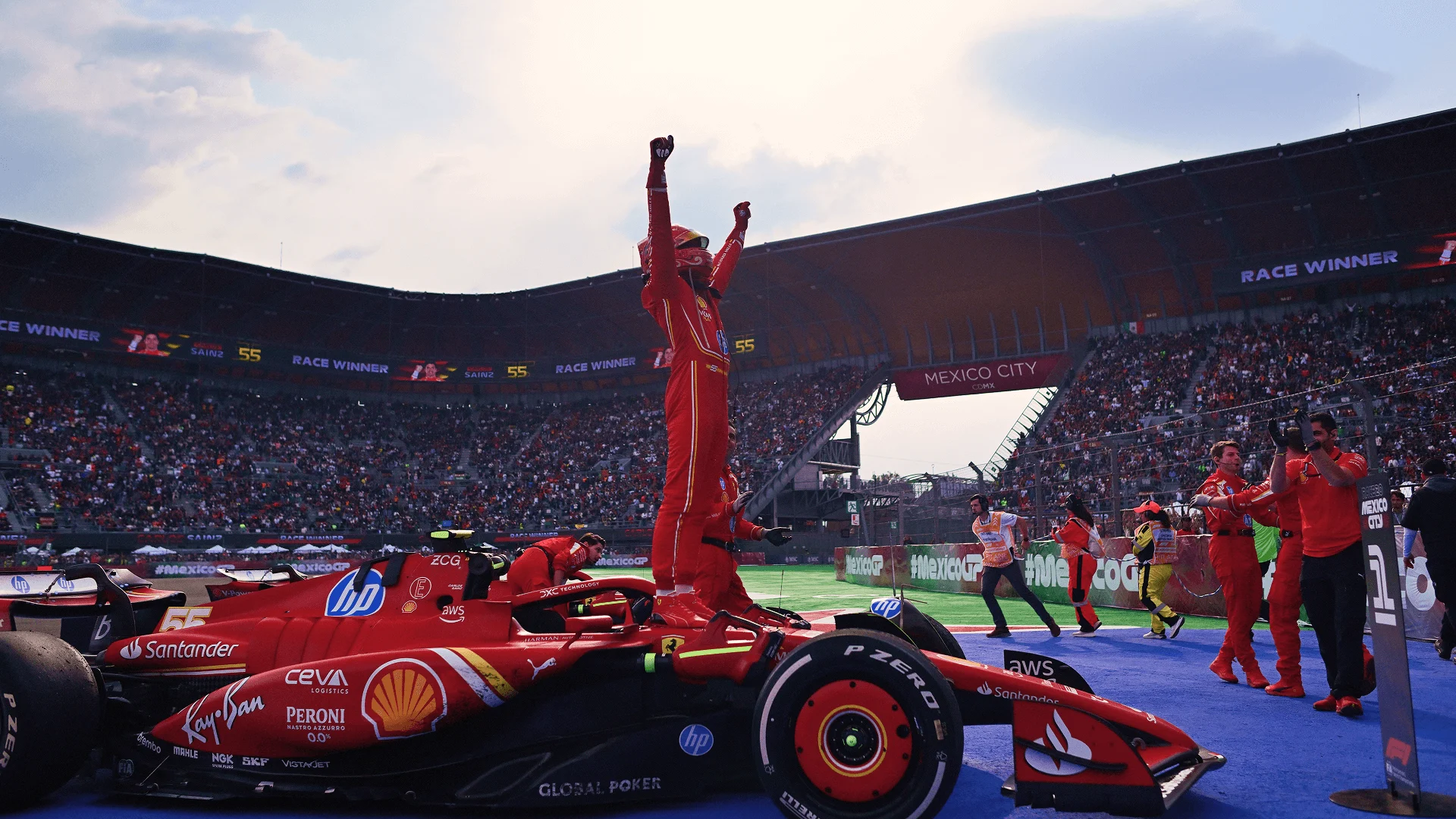
In 2024, Carlos Sainz unveiled a Dia de Muertos-inspired helmet featuring a colourful skull motif across the crown. The design also incorporated a chilli pepper, referencing his long-standing nickname. The Spaniard went on to win the race for Ferrari, making it a memorable helmet for his collection.
Sainz was not the only driver incorporating the occasion into his race weekend that year, with Pierre Gasly also opting for a special design featuring Dia de Muertos-inspired imagery. However, few drivers have embraced Mexican heritage through their helmet designs as consistently as Sergio Perez.
For his home race in 2022, the Red Bull driver unveiled a design featuring La Catrina, an elegantly dressed skeletal figure who has become one of the most recognisable symbols associated with the festivities. The helmet also incorporated papel picado, the decorative paper banners traditionally created by cutting intricate patterns into sheets of coloured tissue paper.
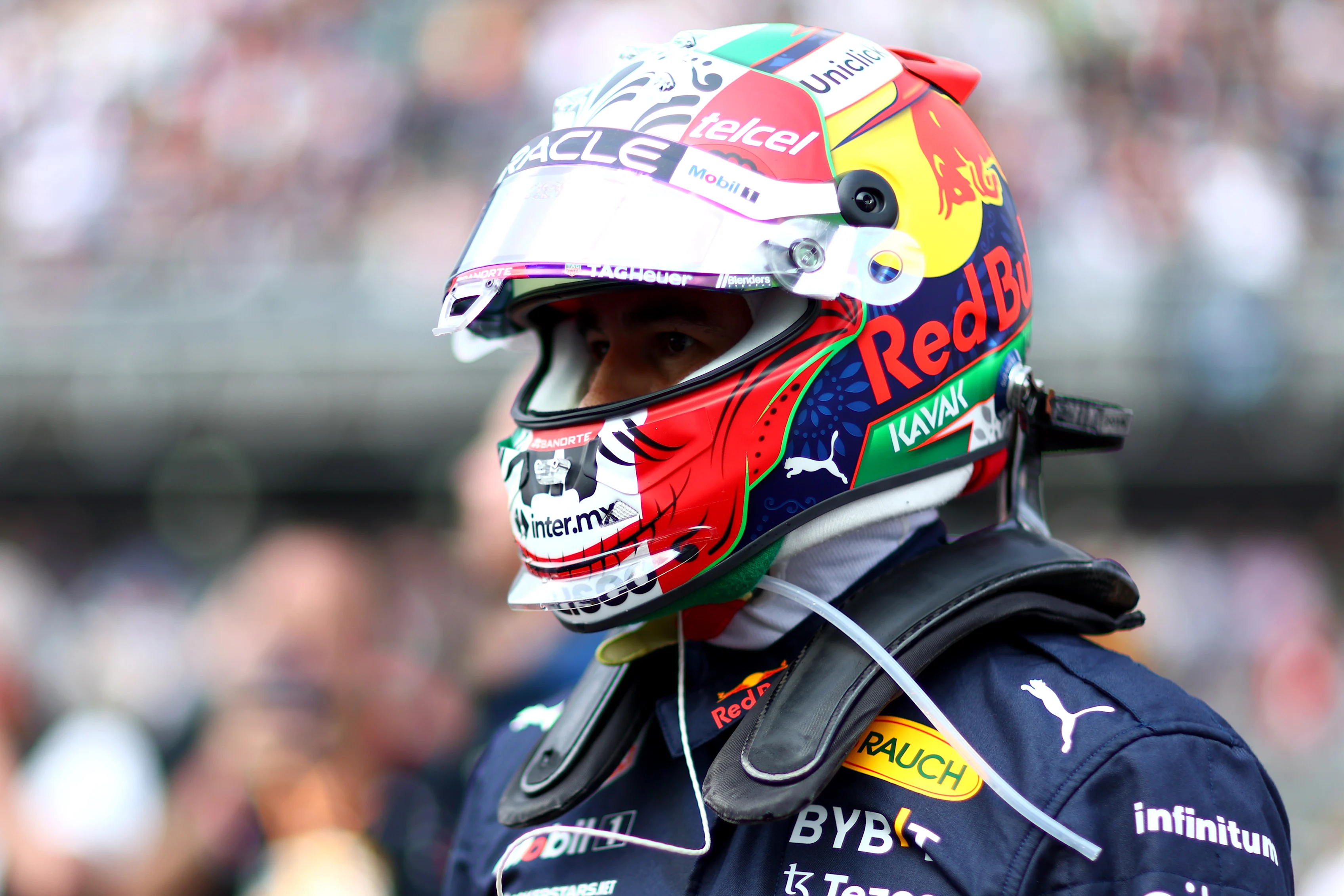
La Catrina has a fascinating history of her own. The figure emerged through the work of Mexican printmaker Jose Guadalupe Posada, whose satirical skeletal imagery was later popularised by the artist Diego Rivera. Today, she appears throughout Dia de Muertos celebrations, with her distinctive hat and elaborate clothing inspiring everything from face paint to enormous public installations.
The following year, Perez unveiled another helmet created by Mexican artist Karla Lozano, whose winning design incorporated papel picado, alebrijes and other cultural references to Mexico and his home state of Jalisco. While alebrijes belong to a wider tradition of Mexican folk art, they have also become familiar sights at contemporary Dia de Muertos celebrations.
The paddock gets a Dia de Muertos makeover
Over the years, the Mexico City Grand Prix paddock has become almost as colourful as the celebrations taking place across the capital.
Anyone who remembers the 2016 Mexico City Grand Prix might recall a rather unusual appearance by Red Bull team mates Max Verstappen and Daniel Ricciardo. Arriving for their Thursday media commitments, the pair were almost unrecognisable beneath elaborate skull-inspired face paint, embracing the imagery associated with Dia de Muertos. Mercedes also joined in with the festivities that year, decorating their hospitality area to mark the occasion.
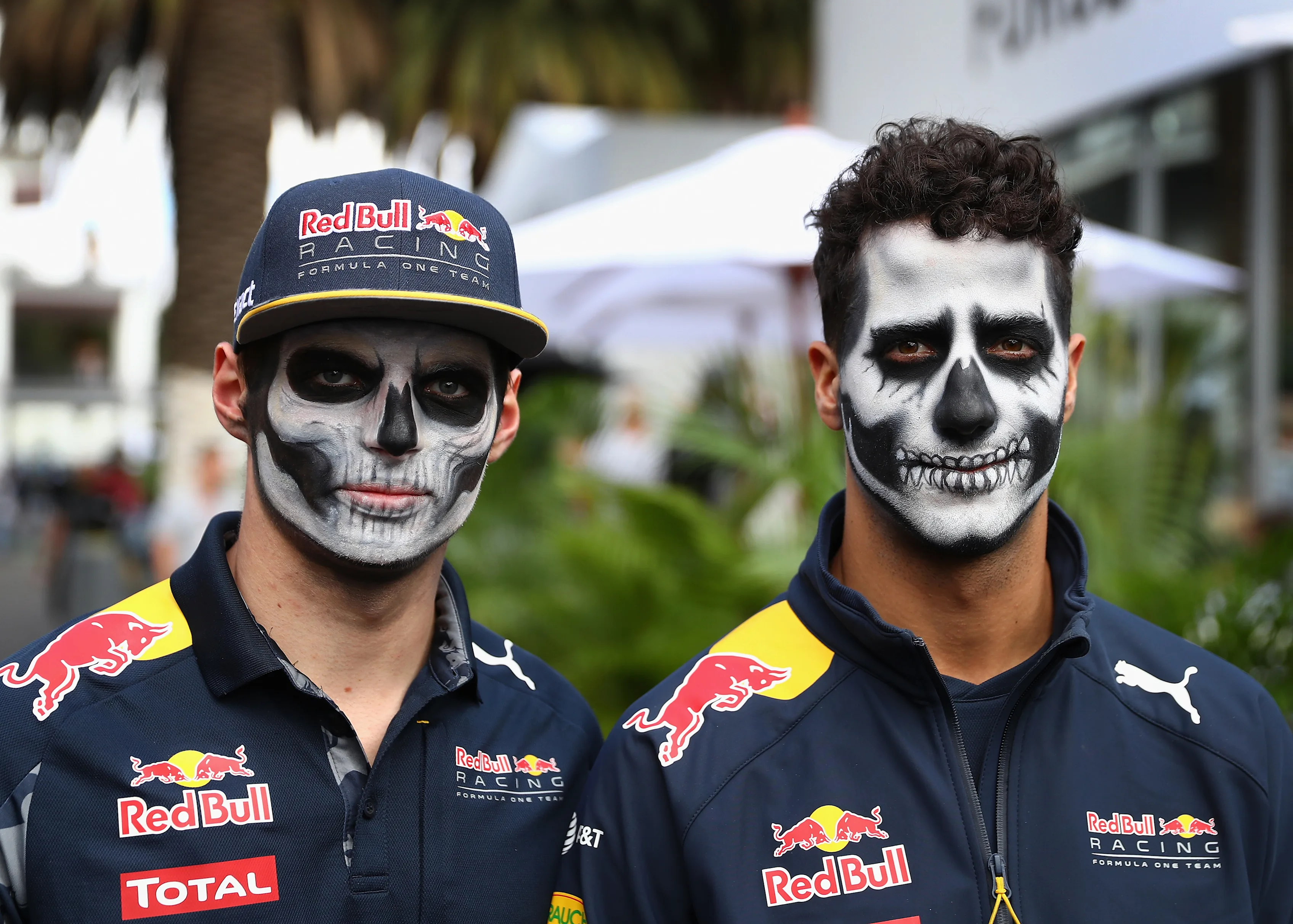
The colourful skeletal designs worn by the Red Bull drivers echoed the calavera, or skull, imagery commonly seen during Dia de Muertos. Skulls appear in various forms during Día de Muertos, including decorative artwork, face paint and sugar skulls known as calaveras de azucar.
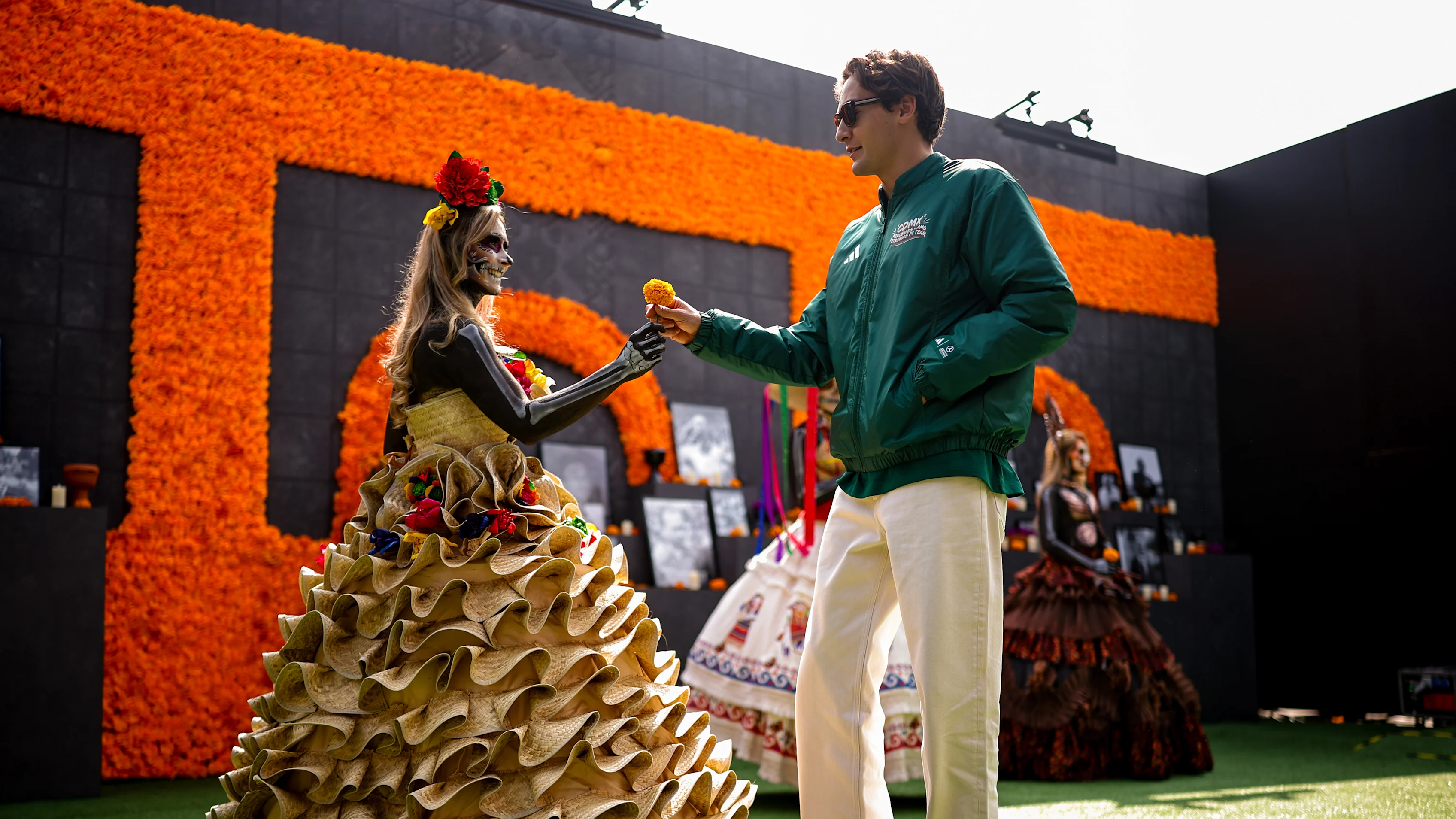
The tradition has continued at subsequent races. In 2024, drivers entering the paddock were welcomed by performers dressed as Catrinas, who handed out cempasuchil flowers, the bright orange Mexican marigolds closely associated with Dia de Muertos. Charles Leclerc made a particularly memorable entrance in a traditional charro-style outfit associated with mariachi musicians, carrying one of the flowers given to him on arrival.
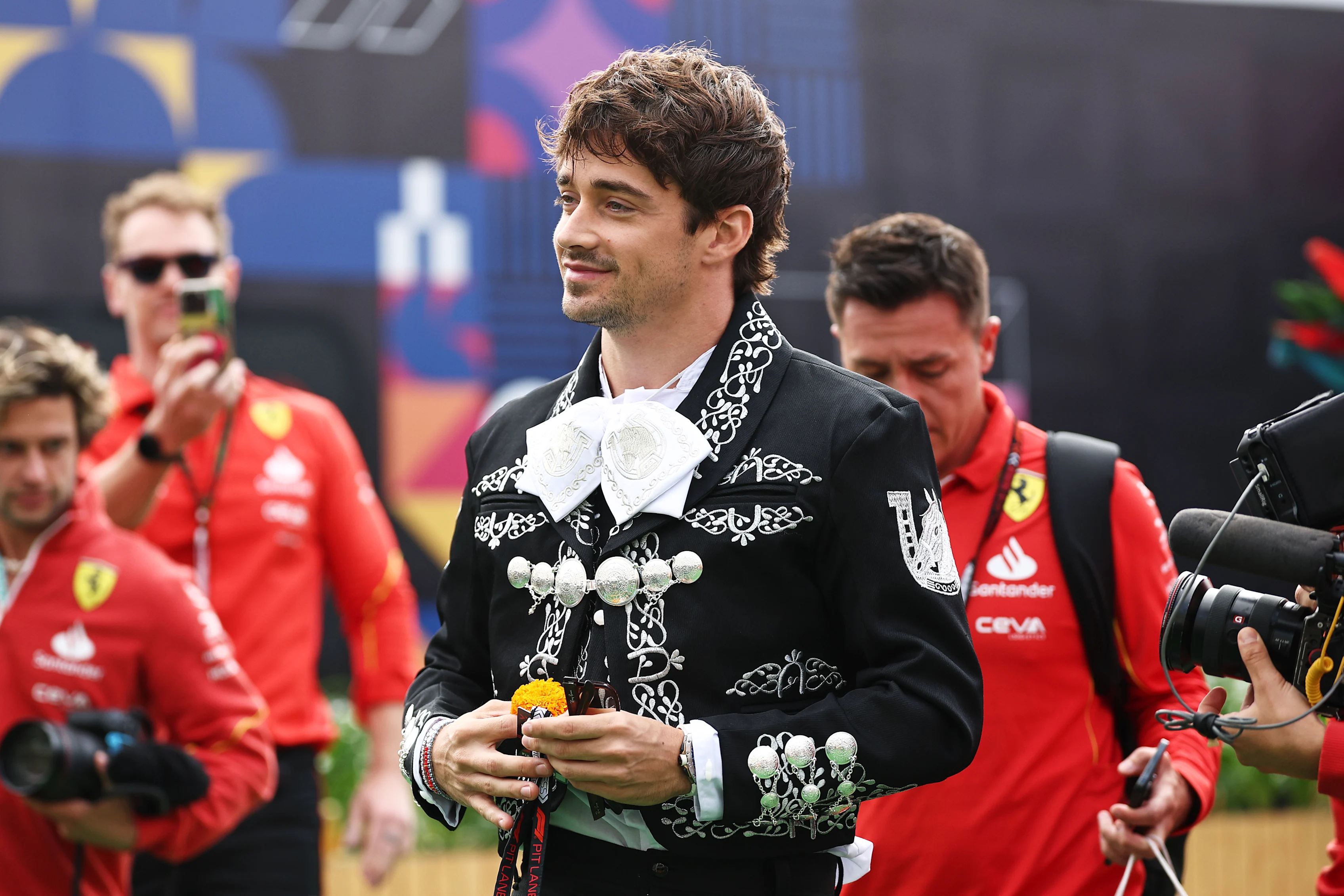
Cempasuchil flowers are traditionally used to help guide the spirits of deceased loved ones back to their families, with petals often arranged along pathways leading towards altars.
A taste of Mexico
Food is central to Dia de Muertos, and it has also provided Formula 1 drivers with some rather entertaining experiences away from the track. During the 2024 Mexico City Grand Prix weekend, Oscar Piastri swapped racing duties for food preparation, making guacamole alongside a Dia de Muertos performer in the paddock.
While guacamole itself is not specific to the celebration, food plays an important role in Dia de Muertos, with families preparing dishes enjoyed by deceased relatives and placing them on ofrendas.
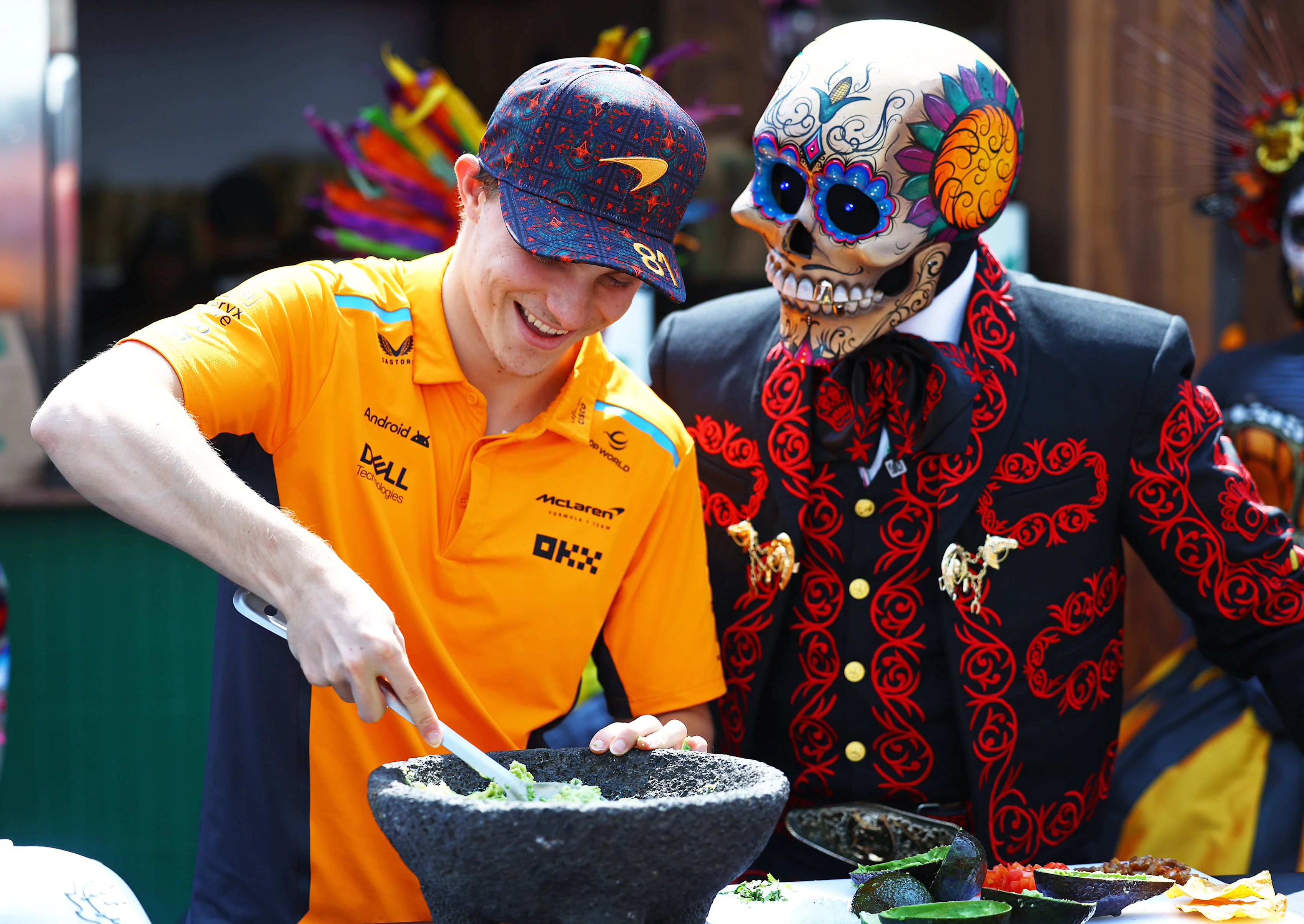
These offerings vary depending on the individual being remembered and the traditions of each family, with everything from tamales and mole to fruit, sweets and favourite drinks appearing alongside photographs and personal possessions.
Perhaps the most recognisable seasonal speciality is pan de muerto, a traditional sweet bread prepared around Dia de Muertos. Often flavoured with orange blossom or citrus and topped with sugar, some versions feature dough decorations shaped to resemble bones.
Recipes differ across Mexico, with regional varieties and contemporary fillings adding to the range available in bakeries during October and November. This year, the Mexico City Grand Prix organisers have confirmed that visitors will be able to sample different versions at the circuit, including traditional sugar-coated breads and filled alternatives.
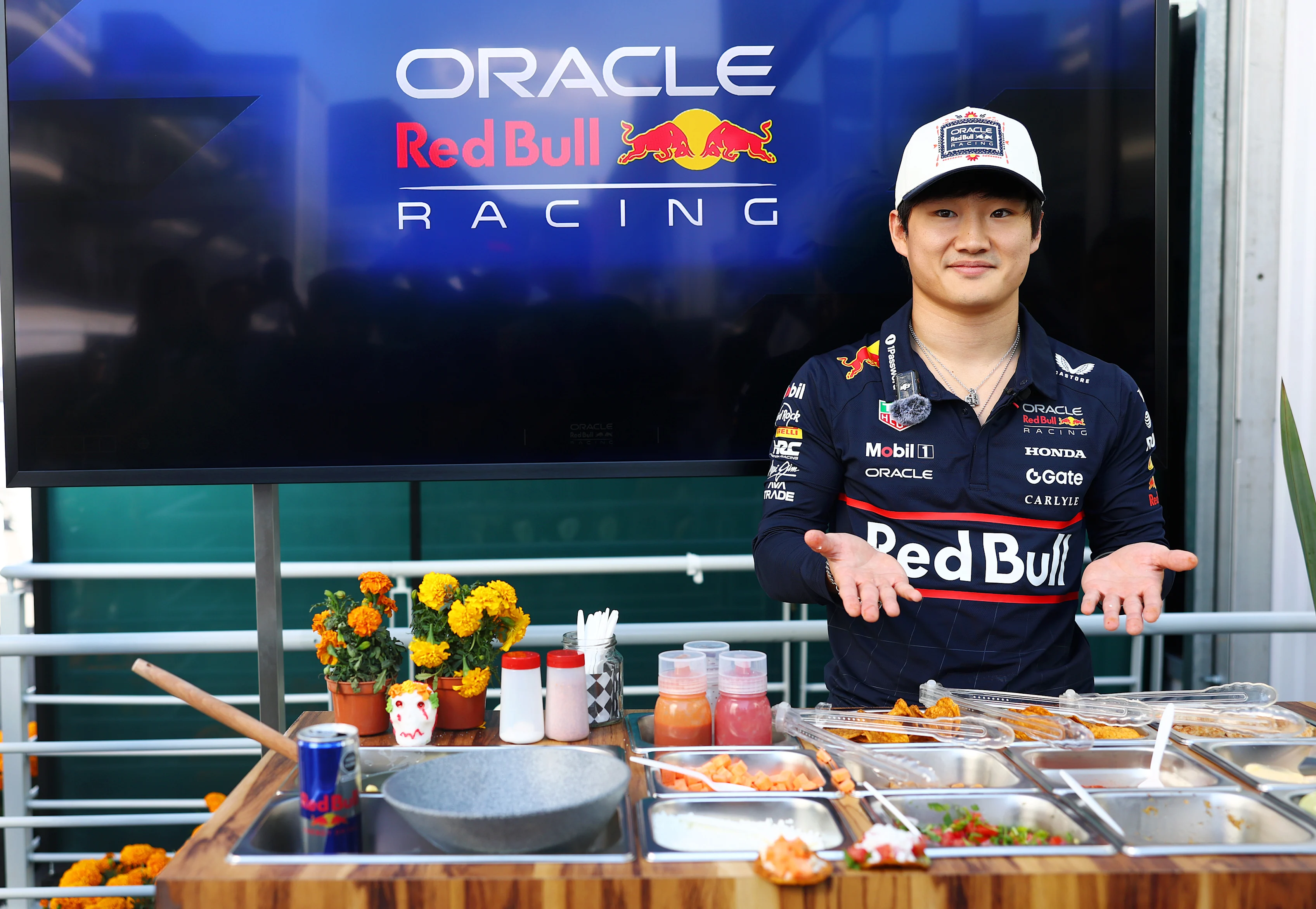
Ofrendas and the meaning behind the celebrations
While the colourful costumes, special helmets and paddock activities have become familiar features of the Mexico City Grand Prix, one of the central Dia de Muertos traditions is the ofrenda.
These altars, created in homes, cemeteries and public spaces, are dedicated to deceased loved ones, bringing together photographs, personal belongings and offerings that reflect the lives of those being remembered.
For the 2026 Mexico City Grand Prix, organisers have confirmed that an altar de muertos will be installed in the circuit's Blue Zone, dedicated to members of the motorsport community who have passed away.
It marks a particularly poignant addition to this year's race weekend, offering a connection between Mexico's tradition of remembrance and the people who have helped shape the sport's history.
With the Grand Prix taking place on 1 November, the display also serves as a reminder of the significance behind the festivities that have become such a recognisable part of F1's annual visit. Beyond the elaborate artwork and celebrations, Dia de Muertos remains an occasion for honouring those who are no longer here, ensuring their memories continue to be shared.
Next Up
Related Articles
 Alonso's 'frustration is beyond imagination' after issues
 Verstappen and Lawson get grid drops after ‘clumsy’ clash
 Russell details 'frustration I have' despite qualifying in P2
 AS IT HAPPENED: Hamilton claims scintillating pole in Mexico City
 Norris pips Antonelli to top spot in Mexico City FP3
 Vasseur on Hamilton’s ‘fantastic job’ in Mexico Qualifying