Hills, a lake and a ‘roller coaster’ – inside Rwanda’s plan for the African Grand Prix
Formula 1 will return to Africa in the early 2030s after Rwanda agreed a 10-year deal to host an African Grand Prix. President Paul Kagame, the country’s officials and the circuit’s designers explain what they are building – and why.
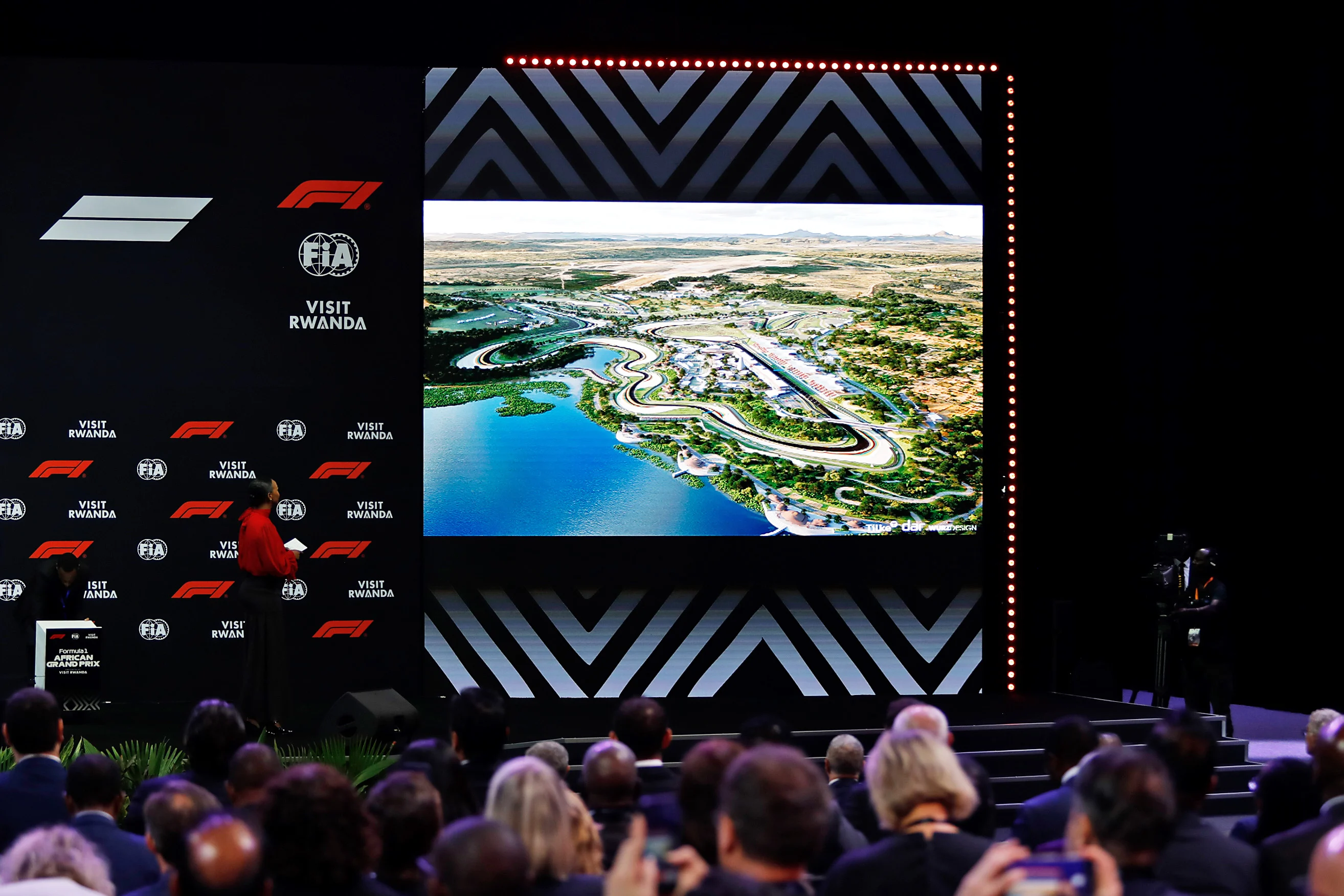
“It will be remembered as one of the most significant days in the history of Formula 1,” said President and CEO Stefano Domenicali, upon the announcement that the championship will hold an African Grand Prix from the early 2030s.
Returning to Africa has been an ambition for F1 for a protracted period but finding the right location, with the right long-term viability, has been a crucial factor. Now, Rwanda provides that platform.
Only two countries in Africa have so far held a World Championship Formula 1 Grand Prix. Morocco’s Ain-Daib road course made a one-off appearance in 1958, while South Africa was visited on 23 occasions, most prominently at Kyalami, but it held its final Grand Prix in 1993.
Rwanda has been up-and-coming within the sporting landscape; Kigali hosted the FIA Awards in 2024 while in 2025 the country held the week-long UCI Cycling World Championships, the first nation in Africa to do so. It will now add a round of the Formula 1 World Championship to its events roster.
It is part of a process not just to develop Rwanda as a tourist, sports and entertainment destination, but to become a focal point for the rest of the continent too, in part explaining the African Grand Prix moniker.
“For decades, African athletes have been a pillar of the global sports economy, adding significant commercial value to top leagues, with the continent receiving almost nothing in return,” said Rwanda’s President, Paul Kagame, at the announcement. “Partnerships like the one we are building help break this cycle.”
Kagame accepted that “we are a small country” but steadfastly believes in using sport as a mechanism to further develop the nation, and the wider continent.
“Formula 1 is part of the big picture of what Rwanda has to build, there are many things that Rwanda has undertaken to do and we have made progress as a country and as a people,” he said.
“But also for Formula 1, we are not looking at just Rwanda alone, we are looking at Rwanda in the context of a continent, and we have ambitions to bring in other African brothers and sisters to participate.”
The announcement of a 10-year contract enables Rwandan officials not just to develop a circuit for the sake of hosting a Grand Prix, but to accelerate the presence of the sport in the continent. Based on previous new race locations, data shows that Formula 1 events typically generate in excess of £100 million of annual economic impact for the host nation.
“We want to make it bigger than just Rwanda,” explained Jean-Guy Afrika, CEO of the Rwanda Development Board. “We want to make it the moment when the sport came back to Africa and then never left.
“We felt that calling it ‘Kigali Grand Prix’ or ‘Rwanda Grand Prix’ would have felt slightly exclusive. You know, it's much easier if you call it an African Grand Prix, to approach partners in this wide effort.
“We foresee a future where we look back at this moment and we see a critical juncture from where multiple races eventually end up happening in Africa.
“I think it will be very thrilling for these young generation of Africans that love the sports and that have been looking for opportunities to experience the sport not on television but in person.
“You've already seen that the interest [in Africa] was very high. We weren't the only ones bidding, and we expect that after the first race, there probably would be many more races.”
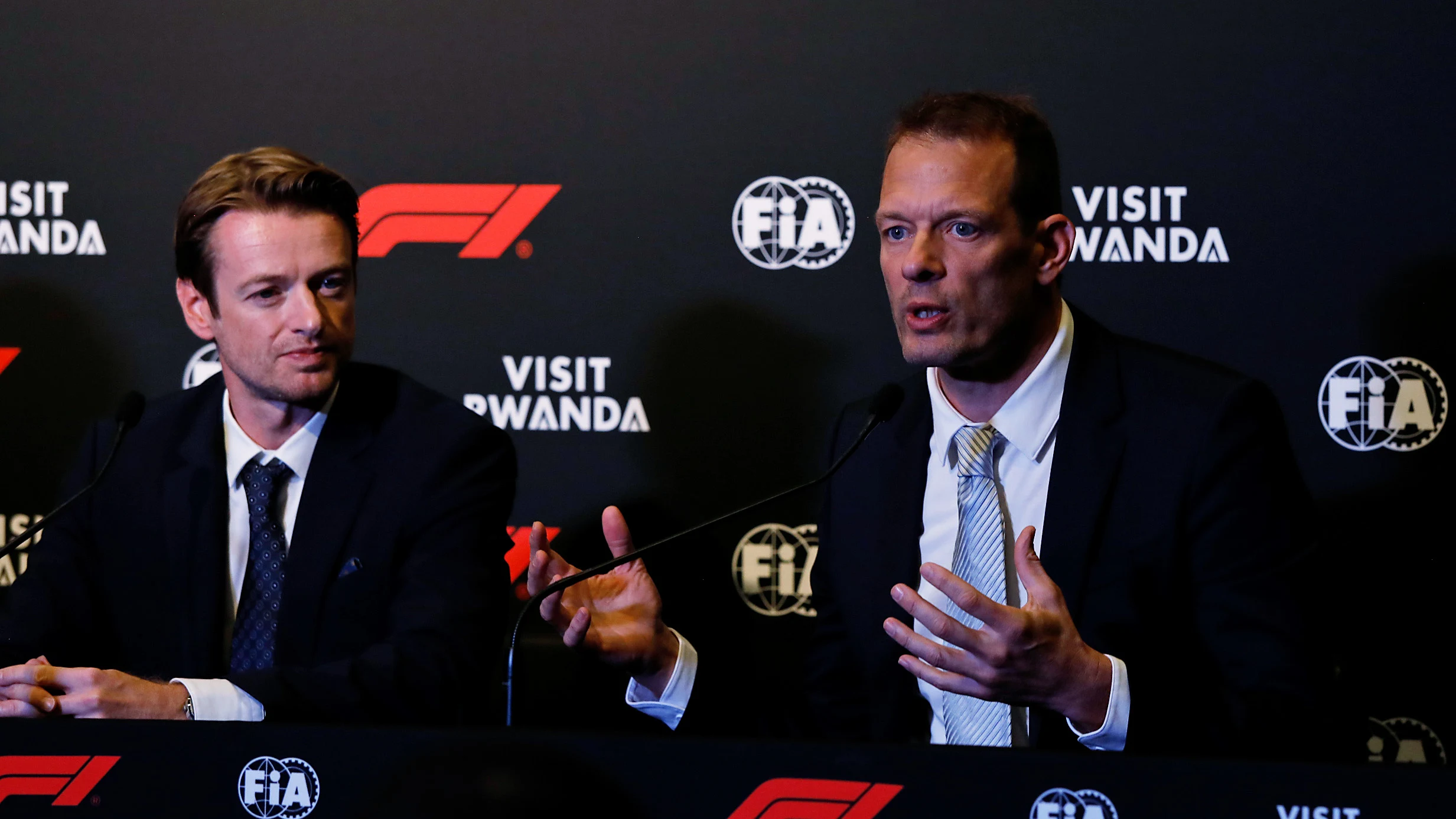
Rwanda will join the calendar in the early 2030s but it first requires a circuit – and that is the task facing Carsten Tilke of renowned designers Tilke Engineering, and ex-F1 racer Alex Wurz of Wurz Designs.
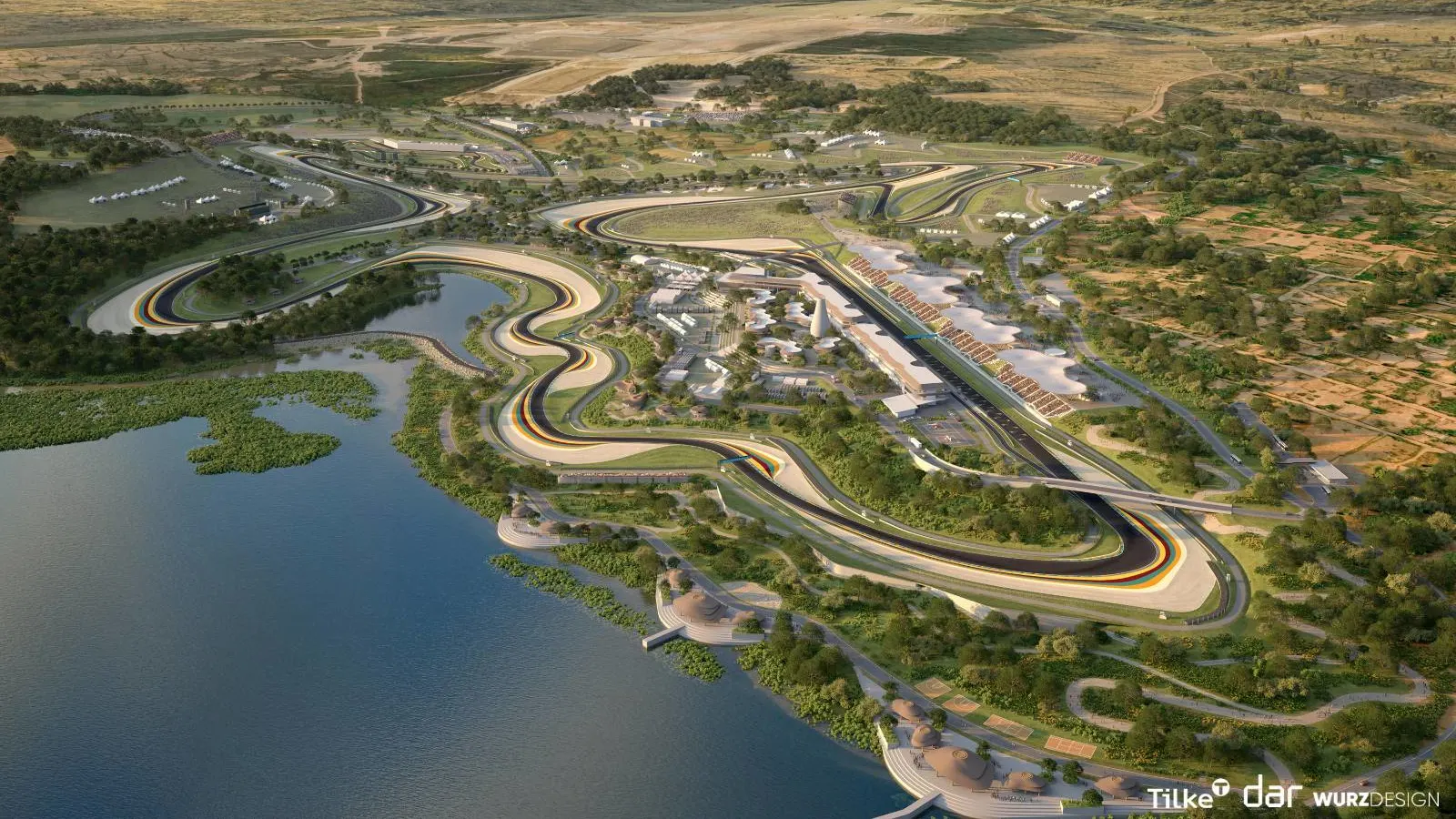
Fortunately for the pair, Rwanda’s location within the Great Rift Valley means it is known as the ‘land of a thousand hills,’ and there are grand plans for the venue, positioned in Bugesera, close to where Kigali’s new international airport is due to open in early 2028.
Wurz has been involved in the project for several years and explained: “One of the first decisions was what sort of circuits and what location should it be?
“There were discussions about a street circuit, relocating elsewhere, maybe occupying the old airport, and multiple locations came up. When we learned about the development in Bugesera, and then we actually saw it, and you see the hillsides and the lakes, I said, ‘guys, there's only one location this circuit should be, because it doesn't need us to design it, because the nature designed already the perfect topography.
“’It's two hills with the lake below, that means we can drive up and down the beautiful landscape and we want to live a picture-perfect African Rwanda landscape.’”
The 6km anti-clockwise circuit is planned to feature 17 corners and has been designed for a wide range of motorsport disciplines. The full track layout has not yet been released but Wurz has completed “thousands” of laps in the simulator, there will be 197 metres of elevation change across a lap, as well as cambered turns and banking.
“It was always important for us that it's amazing to drive, challenging to drive, but on the other hand, also creating great races,” Tilke said. “So we needed to create overtaking points, we needed to make sure different strategies are possible on that track and so on, so that we have a nice Qualifying but also a nice race.
“The other thing very important for us was [that] the focus was always the spectator. Spectators must be close to the track, must feel the track, must be part of it. It really is a roller coaster track.”
That extends to the facility itself, which will feature paddock buildings typical of Rwandan architecture, incorporating the village ethos and classic red dirt look, while the multi-purpose facility is also intended to be utilised for concerts and other major events.
The investment also includes a karting facility – in order to focus on long-term grassroots support – as well as a driving experience centre and off-road courses.
Kigali is located around 1,500 metres above sea level, which will make it one of the highest circuits on the calendar, with Mexico City at 2,200 metres. That has an impact on the performance of machinery, and Wurz says that is being factored into simulations.
“That means we have less pressure in the air, that means also less grip from the aerodynamics,” he explained. “So we can counter that with some of the cambers.
“[In simulations] we are playing heavily with slight camber changes at times when you have degradation on the front or the rear, we consider what tyre temperatures are coming into corners, so that the defending driver actually is at disadvantage for the next long straight.
“There's a lot of science as well as knowledge from the years of driving and designing tracks going in.
“I can tell you it's going to be a drivers’ track. If you believe me a little bit, it's going to be one classic of a track immediately. I hope that this circuit is the cherry on the cake on everyone's list.”
Next Up
Related Articles
 Verstappen your Singapore Driver of the Day after dominant win
 When is the earliest Antonelli could win the title?
 OFFICIAL GRID: Who starts where for the Singapore Grand Prix
 Betting5 betting lessons after Verstappen wins Singapore GP
 Verstappen thrilled with first Singapore win at 10th attempt
 Hamilton apologises after ‘painful lesson’ in Singapore